
What If the Other Driver Changes Their Story After an Accident in Arkansas?
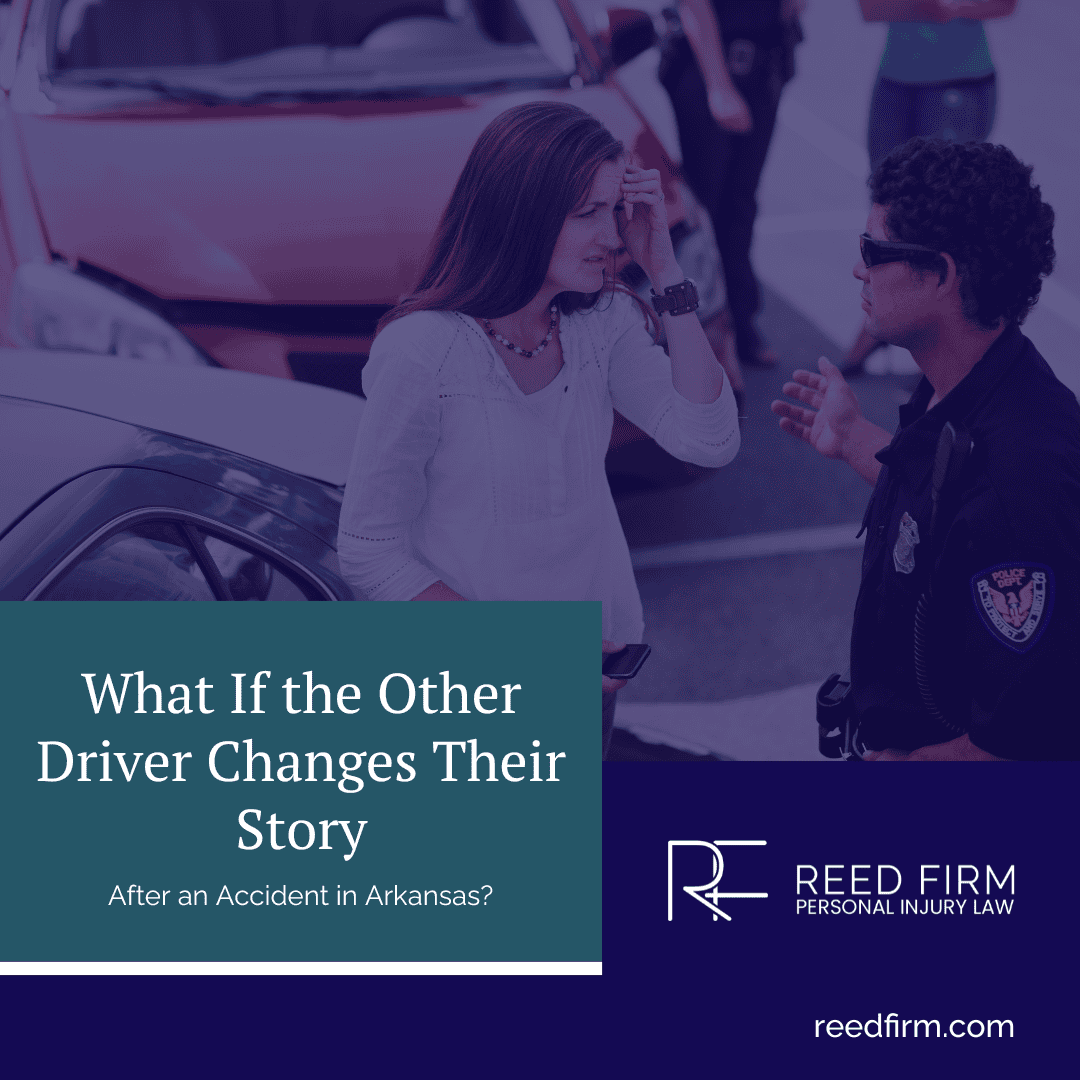
It’s more common than you might think.
At the scene of a crash, the other driver may admit fault, apologize, or even say, “I didn’t see you.” But later, sometimes just days after, their story changes. Often, this happens when the other driver must provide a statement to his or her insurance company.
Suddenly, blame shifts. Details are disputed. And now you’re dealing with conflicting accounts of a car accident.
If you’re in Arkansas and facing this situation, you’re not alone. And more importantly, you still have options.
At Reed Firm, we’re committed to helping people navigate these moments with clarity and confidence, while being upfront about what we do and don’t do.
A Quick but Important Disclaimer
Before we dive in, we want to be clear:
- We only handle bodily injury cases, which means you were physically injured in the accident.
- We do not take property damage-only claims or disputes involving vehicle damage alone.
- This blog is for educational purposes, to help you understand how these situations work.
If your situation involves injuries caused by another driver’s negligence, Reed Firm can help you.
Why Do Car Accident Stories Change?
When car accident stories don’t match, there’s usually a reason, and it’s not always innocent.
Common causes include:
- The other driver realizes they may be financially liable
- They speak with their insurance company or an attorney
- They panic about consequences (tickets, lawsuits, premiums)
- They genuinely remember events differently over time
Unfortunately, once a story changes, it can complicate your claim.
What Happens When There Are Conflicting Accounts?
When there are conflicting accounts of a car accident, insurance companies don’t just take one side at face value.
Instead, they evaluate:
- Physical evidence from the scene
- Vehicle damage patterns
- Photos and videos
- Witness statements
- Police reports
- Expert analysis (in more serious cases)
If there’s not enough evidence to clearly establish fault, insurers may:
- Deny the claim
- Split liability between drivers
- Delay the process significantly
Insurance companies tend to rely heavily on their policyholder’s version of events, often accepting their statements as gospel. That’s why documentation and early action are so important.
Does the Police Report Settle the Dispute?
Not necessarily.
Police reports are certainly helpful, but they are not the final word on fault.
If the officer didn’t witness the accident, which is typically the case, the report will simply reflect initial statements. And if those statements later change, the report becomes just one piece of the puzzle.
This is especially important in cases where car accident stories don’t match because the truth must be established through evidence, not just opinions.
How to Protect Yourself When Stories Change
If you suspect the other driver is changing their story, here’s what you should do:
1. Document Everything Immediately
If possible, gather evidence at the scene:
- Photos of vehicle positions and damage
- Road conditions and traffic signs
- Any visible injuries
- The other driver’s statements (written or recorded, if lawful)
2. Get Witness Information
Neutral third-party witnesses can be critical when there are conflicting accounts of a car accident.
3. Seek Medical Attention
If you’re injured, get evaluated right away, and tell the medical providers what happened and how you were hurt, using as much detail as you can. Medical records can help establish both evidence of injury and details of the incident.
4. Avoid Giving Recorded Statements Too Soon
Insurance companies may ask for statements early. It’s always best to speak with an attorney first. In fact, Reed Firm clients are not going to give statements if we’re involved early enough to nip that in the bud. The insurance company can learn what it needs to know from us.
5. Consult an Attorney (For Injury Cases)
If you were hurt, legal guidance and representation can make a major difference in proving what really happened.
How Fault Is Proven in Disputed Accidents
When car accident stories don’t match, proving fault often comes down to evidence, not just words.
Key factors include:
- Vehicle damage analysis – Does the damage match the claimed sequence of events?
- Accident reconstruction – Experts can recreate how the crash likely occurred
- Surveillance or dashcam footage – Increasingly common and highly persuasive
- Consistency of statements – Changing stories can undermine credibility
In many cases, the truth becomes clear when the evidence is carefully analyzed.
Why These Cases Can Be Challenging
Disputed liability cases are often more complex because:
- There’s no clear admission of fault
- Insurance companies are more likely to push back
- Evidence must be stronger and more detailed
- Resolution may take longer
For minor accidents involving only property damage, these disputes often become frustrating and difficult to resolve, which is why it’s best to carry your own coverage for all foreseeable incidents.
The Role of Insurance Coverage
When fault is disputed, your own insurance coverage can play a critical role.
These types of coverage often come into play:
- Uninsured motorist (UM)
- Collision coverage
- Comprehensive coverage
- Medical payments coverage or personal injury protection
We strongly encourage drivers to review their policies and ensure they have adequate protection in place.
How Reed Firm Can Help
At Reed Firm, we focus on cases where people have been injured due to someone else’s negligence.
When stories conflict, we:
- Conduct independent investigations
- Gather and preserve critical evidence
- Work with experts when needed
- Challenge inconsistent or changing statements
- Advocate aggressively with insurance companies
We don’t just accept claims. We pursue justice for people whose lives have been impacted.
Frequently Asked Questions (FAQ)
What should I do if the other driver changes their story?
Focus on evidence. Document everything, gather witnesses, and seek legal advice if you were injured.
Can I still win my case if car accident stories don’t match?
Yes. Many cases involve conflicting accounts. Strong evidence can establish fault regardless of what the other driver claims.
Will insurance deny my claim if there’s a dispute?
It’s possible. Disputed liability can lead to delays, partial fault findings, or denials, but these outcomes can often be overcome.
Do I need a lawyer for a disputed accident?
If you were injured, it’s highly recommended. These cases are more complex and require a strategic approach.
Does Reed Firm handle these cases?
Yes, but only when there are bodily injuries involved. We do not handle property damage-only disputes.
The Bottom Line: The Truth Still Matters
When conflicting accounts of a car accident arise, it can feel like your word is being challenged at every turn.
But the truth doesn’t disappear just because someone changes their story.
With the right evidence, the right strategy, and the right support, it can still come to light.
Contact Reed Firm
If you’ve been injured and the other driver is now telling a different version of events, Reed Firm is here to help you understand your options.
We are driven by a passion for helping people and an obsession with justice, and we’re ready to stand with you when it matters most. Reach out today to see if your case qualifies.