
Single-Vehicle Accidents in Arkansas: When You May Still Have a Valid Injury Claim
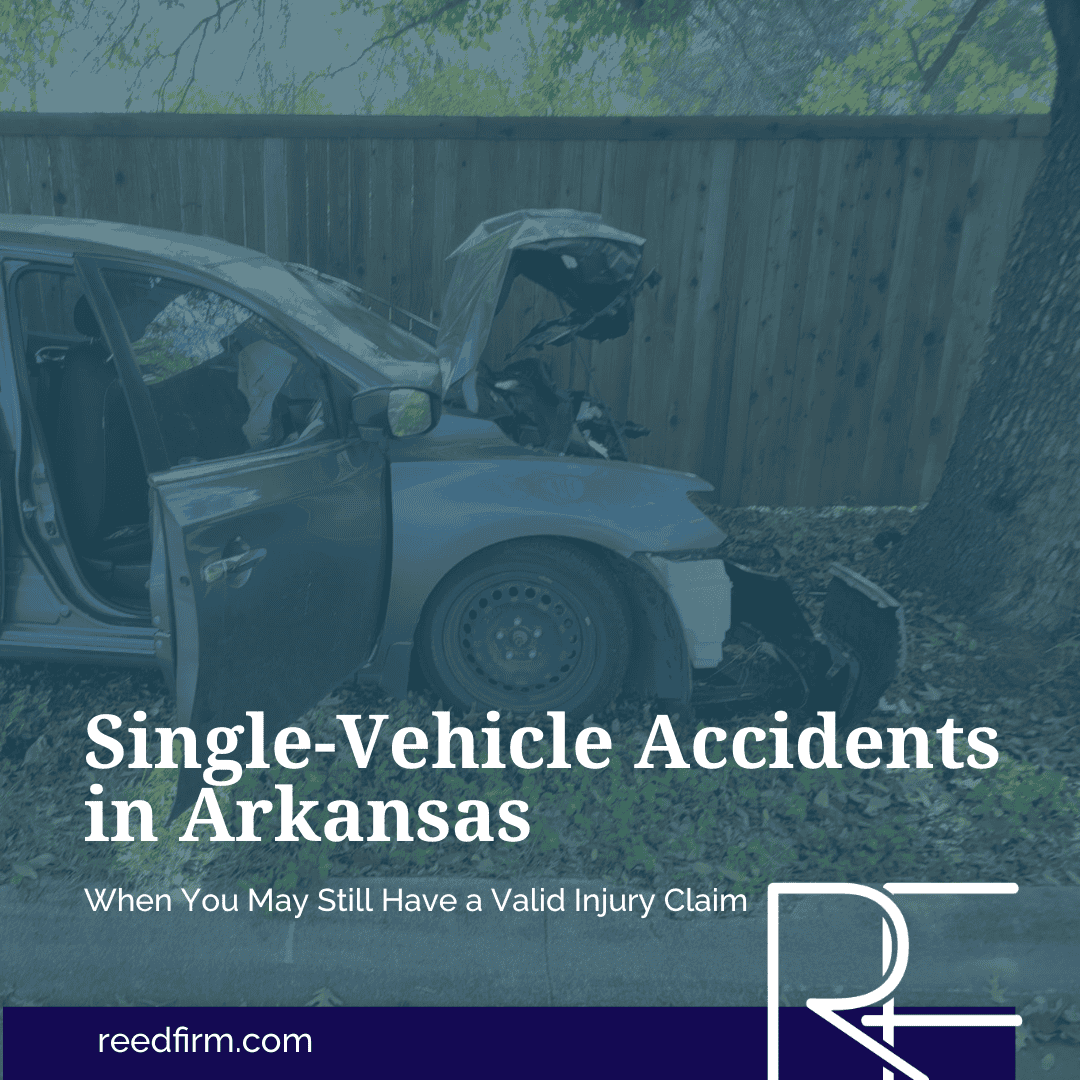
When people hear the phrase “single-car crash,” they often assume the driver is automatically at fault, and that no compensation is available. Insurance companies may rely on that assumption to shut down claims quickly.
The reality is more complex. While a single vehicle accident in Arkansas may involve only one car, there are two very important legal paths to compensation:
- A third party may be partially or fully at fault, creating a personal injury claim
- Even an at-fault driver may still recover certain damages through their own insurance coverage
At Reed Firm, we help injured Arkansans understand all available options, especially when insurers say, “You don’t have a case.”
What Is a Single-Vehicle Accident?
A single-vehicle accident typically includes:
- Running off the road
- Hitting a tree, pole, or guardrail
- Rolling over
- Losing control and crashing without another vehicle involved
These crashes often lead insurers to blame the driver immediately, but fault is not always so simple.
A Key Legal Principle: Fault Is Still Required for Injury Claims Against Others
Arkansas is an at-fault state. To recover compensation from another person or entity, that party must be at least partially responsible for causing the crash.
This means:
- A driver obviously cannot sue themselves for negligence
- A valid injury claim requires someone else’s fault, even in a single-car crash
That requirement is central to any accident claim where someone ran off the road. The claim must typically bebased on third-party negligence.
Common Situations Where Another Party May Be at Fault
1. Unsafe Roads
Contractors may share fault for:
- Potholes or uneven pavement
- Missing or damaged guardrails
- Poor drainage causing hydroplaning
- Lack of warning signs for known hazards
2. Another Driver Forced You Off the Road
Many single-vehicle crashes are actually no-contact accidents, such as:
- A speeding driver cuts you off
- An oncoming vehicle crosses the center line
- A reckless driver causes you to swerve to avoid a collision
Even without contact, that driver may still be legally responsible.
3. Vehicle Defects or Mechanical Failures
Liability may rest with a manufacturer or repair provider if the crash involved:
- Tire blowouts
- Brake failure
- Steering defects
Important: An At-Fault Driver May Still Have Insurance Coverage
Even if a driver is ultimately found at fault, that does not always mean they are left without compensation.
Depending on the policy, a driver may still recover certain damages through:
- Medical Payments (MedPay) coverage (if included)
- Personal Injury Protection (PIP) (if included)
- Collision coverage for vehicle repairs
- Uninsured Motorist (UM) coverage in some scenarios
Insurance companies may or may not volunteer this information. If you lost control, a car accident lawyer can review the policy and identify benefits that still apply.
Passengers in Single-Vehicle Accidents May Have Strong Claims
Passengers are in a very different legal position.
If you were injured as a passenger in a single-car crash:
- You are likely not considered at fault
- You may have a claim against the driver of the vehicle
- You may also have access to your own underinsured motorist (UIM) coverage
This is true even if:
- The driver is a friend or family member (in most cases)
- Weather or road conditions played a role
Passenger injury claims are often valid and compensable, even when the driver believes the crash was “just an accident.”
Why Insurance Companies Deny These Claims
Insurers often try to simplify single-vehicle accidents by saying:
- “The driver lost control”
- “No one else is responsible”
- “There’s no claim here”
But these statements ignore:
- Third-party negligence
- Available first-party insurance coverage
- Passenger injury rights
Without legal guidance, injured people may walk away from compensation they are legally entitled to receive.
Evidence That Can Make or Break a Single-Vehicle Claim
Strong cases often depend on:
- Crash scene documentation
- Police reports
- Dashcam or nearby surveillance footage
- Witness statements
- Vehicle inspections
- Road maintenance and repair records
Time is critical, this evidence can disappear quickly.
How Reed Firm Helps After a Single-Vehicle Accident
Single-vehicle cases demand careful analysis, not quick assumptions. At Reed Firm, we dig deeper to identify every possible source of compensation.
We work to:
- Determine whether a third party shares fault
- Identify applicable insurance coverage for at-fault drivers
- Protect injured passengers’ rights
- Push back against unfair insurance denials
Our mission is simple: no one should be denied justice because their case is misunderstood or oversimplified.
Speak With a Car Accident Lawyer in Arkansas
If you were injured in a single vehicle accident in Arkansas, do not assume you have no case, or no options. Whether your injuries involve third-party fault, your own insurance coverage, or a passenger injury claim, the details matter. Contact Reed Firm today to speak with a trusted Arkansas accident lawyer. We’ll help you understand your rights, your coverage, and your path forward, so you can focus on healing while we fight for justice.